
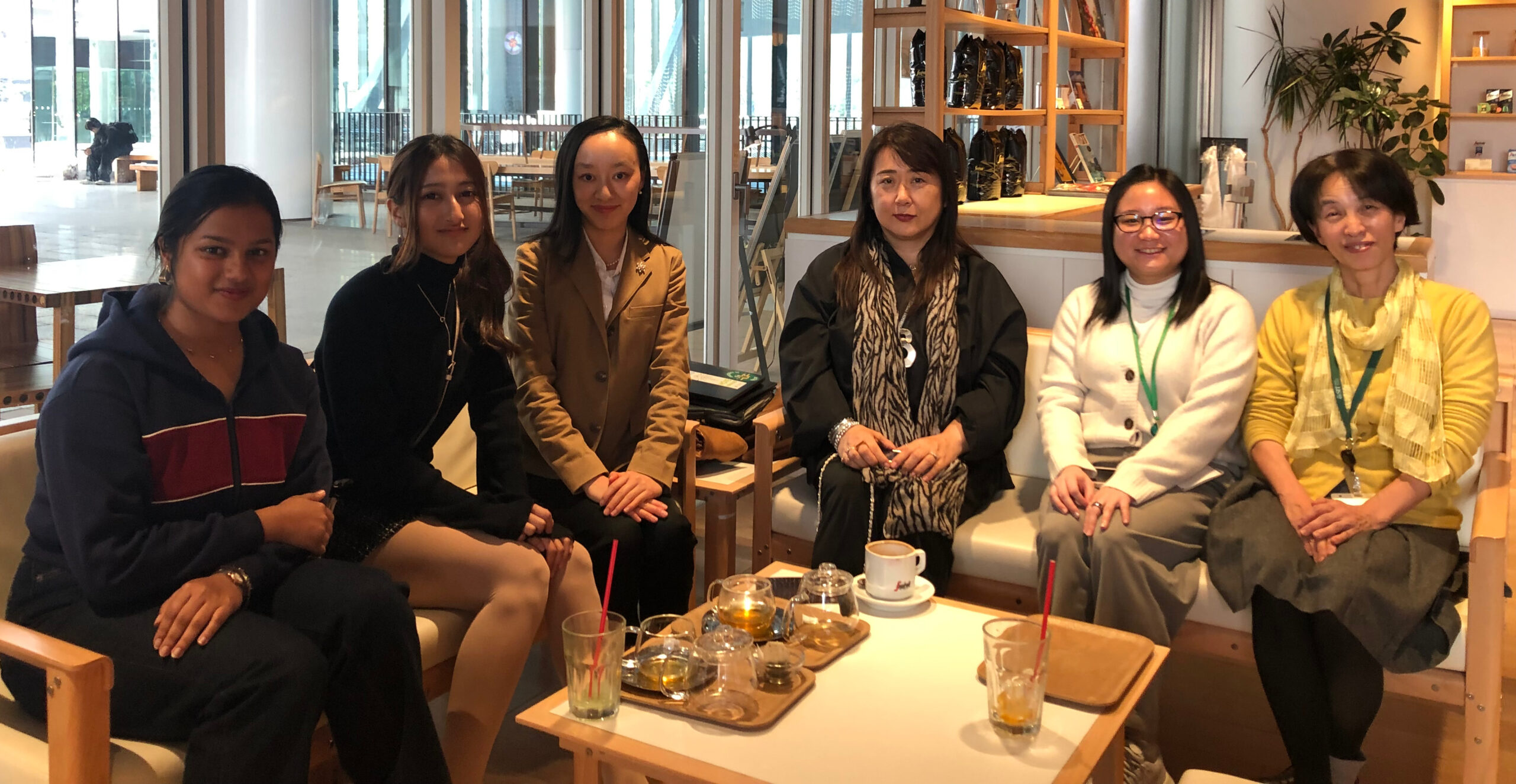
A Japanese High School Graduate and a Student with an International Background Share Their Lives in IGP
The Innovative Global Program (IGP) is an international undergraduate engineering program at the College of Engineering at Shibaura Institute of Technology, where students study engineering in an English-language environment and can get involved in research early on in different fields.
“Studying engineering in English sounds so difficult.”
“Can I even do this?”
If these sorts of thoughts sound familiar to you, then don't worry as you’re not alone.
To find out what life at IGP is really like, we sat down with Mare, a first-year student who joined IGP straight from a Japanese high school, and Swetha, a third-year student with Japanese and Indian heritage.
In their own words, they describe the challenges they have faced, their growth, and their hopes for the future.
Student Profiles
Mare (College of Engineering, IGP, 1st year)
- Joined IGP after graduating from a Japanese high school.
- Affiliated with the Ergonomics and Biomechanics Laboratory.
Swetha (College of Engineering, IGP, 3rd year)
- An IGP student with Japanese and Indian heritage, who grew up in both countries.
- Affiliated with the Polymer FabTech Lab, conducting research on functional materials.
IGP Student Interview:
Choosing to Do Research in an English Medium Instruction (EMI) setting.
One of IGP’s most distinctive features is the opportunity to get involved in research early even on challenging subjects.
Swetha sees this as one of the program’s biggest draws.
“At most universities, research doesn’t begin until your fourth year, but in IGP, you enter that environment much earlier. It’s challenging at first, but I learn something new every day. It has been an incredibly valuable experience.”
Currently, Swetha is researching hydrogels (a type of functional material) and has been picking up essential research skills along the way, from designing experiments to recording data.
From a Japanese High School to IGP and From Studying English to Using it
英語を「学ぶ」から「使う」へ
For Mare, coming to IGP straight from a Japanese high school was a real leap.
Initially, she found the idea of taking all her classes in English daunting:
“At first, I was afraid to ask questions. But the professors were so kind and encouraging, and I realized I didn’t need to be scared of making mistakes. After that, asking questions actually became fun, and I started participating in class much more actively.”
In the time she has spent at IGP, Mare has come to see English not just as a subject that you have to study, but also as a helpful tool for expressing her ideas.
“In our C programming class, we work through projects by discussing them in English. I started to feel that English is a tool, something you need to get your ideas and opinions across.”
Your English Ability Will Naturally Grow After You Enroll
When asked about studying entirely in English, Mare had this to say.
“My speaking and listening have definitely improved. Since I use English every day, I just got used to it naturally.”
Swetha agrees, and says the key to improving any language is simply using it.
“Language doesn’t improve if you don’t use it. Watching movies, talking about things you love in English, actively using the language is what really matters.”
IGP: An International Community
IGP brings together students from countries across Asia and beyond.
Swetha describes IGP this way.
“IGP feels like a little international community. You get to learn side by side with students from all kinds of cultural backgrounds.”
Mare also loves the everyday interactions with her classmates.
“Lunchtime is my favorite part of the day. We talk about each other’s cultures and I always end up learning something new.”
Feeling Nervous About Using Your English Every Day? That’s Completely Normal
In particular, it’s very natural to feel nervous about studying a new academic subject in English.
Here’s what Swetha wants Japanese middle and high school students to know.
“Studying STEM in English might feel scary, but it’s an environment where you’re learning both English and science at the same time.”
Mare adds her own encouragement.
“If you have even a small desire to learn something through English, I think it’s absolutely worth taking the challenge.”